Color Me a Kidlit Writer
  • About Me
  • Mama's Chicken & Dumplings
  • Reviews
  • Other Books & Stuff
  • Magazine Work
  • Work-For-Hire Books
  • School Visits
  • Events
  • Interviews, Blog Parties & More

Mama's Chicken & Dumplings: The School

12/17/2024

0 Comments


Jefferson School, Charlottesville, Virginia


Picture
​Left to right, (front row) Margaret L. Terry, Maude M. Gamble (principal) and Cora B. Duke; (second row) Ella J. Banks, Rebecca Fuller McGinness, Peachie Carr Johnson, Mary Kathleen Chisholm, Carrie W. Michie, and Gertrude Inge; (third row) Nannie Cox Jackson, Marion B. Wyatt, Jane C. Johnson, and Helen E. Jackson.​

I love the above picture so much! It's of ​the faculty of Jefferson School in Charlottesville, Virginia, during the era of segregation, taken as best I could figure during the 1926-7 school year. To me, the image is absolutely beautiful for many reasons. For one, I love the dignity, confidence, and determination these women project on camera. And it's no illusion! They were dignified, confident, and determined on many levels, despite the harsh racial conditions of the times. I found it easy to imagine the African American men of the local area tipping their hats in courtesy as these ladies walked by. My imaginings made me want to write a scene in my middle-grade Mama's Chicken & Dumplings where a gentleman of Vinegar Hill tips his hat out of respect for Allie's best friend, Jewel, while she walks by pretending to be as sophisticated as the ladies in the above image, despite Jewel being only ten years old. 

Picture
Isabella Gibbons

The history of Jefferson School in Charlottesville stretches back to right after the Civil War ended and all those with African descent were freed from the institution of slavery. Anna Gardner, an educator with European decent from Nantucket, an island in Massachusetts, arrived in Charlottesville around 1867. She opened a New England Aid Society's Normal School, which prepared men and women for the task of teaching the newly freed citizens of the area. Later, the school became a Freedmen’s School under the direction of the Freedmen's Bureau. Anna named her group of students the Jefferson School. 

One of the first teachers of color at Jefferson School was Isabella Gibbons who had once been enslaved at the University of Virginia. Despite the law of the times, Gibbons had learned to read and write beautifully, and had taught her daughter Bella to do the same. Isabella's husband William Gibbons could also read and write. He became a well-respected Baptist minister after Freedom came.

Jefferson School became a public school of the City of Charlottesville in 1871. Benjamin E. Tonsler was one of the school's earliest principals. He was a beloved member of the community. Many graduates from Jefferson School attended historically Black colleges and universities like Hampton University, and obtained degrees in all types of disciplines, including those in medicine, engineering, and science, even though they had to complete their high school studies outside of Charlottesville since Jefferson School graduated students after the eighth grade. 

Picture
Rebecca Fuller McGinness

The name I chose for Allie's fifth grade teacher was Mrs. McGinness. I chose it out of respect for Rebecca Fuller McGinness, a tireless educator who spent decades teaching at Jefferson School. If you examine the oral histories of those who attended Jefferson School as students, the name Mrs. McGinness often comes up. They mention her as a teacher who inspired them to achieve their personal best. Mrs. McGinness was a graduate of Jefferson School before there was a high school. She finished her studies at Hampton Agricultural and Industrial School, now Hampton University, graduating from there with her teaching certification in 1915, and later a bachelor's degree. When she was 100, Hampton gave her an honorary doctorate degree. Mrs. McGinness lived to the ripe age of 107.

PictureCora [Murray Brown] Duke
While I named Allie's principal Mr. Duncan, the real Mr. Duncan--Owen Duncan-- was the principal of Jefferson High School in the 1940s. In 1935, the year Mama's Chicken & Dumplings takes place, Cora B. Duke was the principal of the "Old" Jefferson School--the one that housed grades one through five. Mrs. Duke was known as a woman who put the students' needs ahead of her own. When she retired, the school community threw her a grand celebration thanking her for her educational leadership and community involvement. Doesn't she look grand in her feathered hat in the photo taken in 1915 at the Holsinger Portrait Studio located in Charlottesville? Indeed!


After the building to house Jefferson's junior and high school grades opened on the same campus as the older building in 1927, extracurricular activities for the African-American youth of Charlottesville began to thrive. There was a debate team, science club, marching band, literary clubs, a choir, a dramatic club, and more. For years, Jefferson School's after-school groups were well-known throughout the state as being top performing. They competed against other African American schools located throughout Virginia. Below is the undefeated "Red Devils" football team of 1935.

I really enjoyed imagining Allie playing the flute in the Jefferson School band, vying for first chair. 

Picture
From left to right, (front row) Charles L. Jackson, Lloyd Quarterman, Billy "Goat" Lewis, John Locket, William "Shortie" Brown, Carter "Red" Wicks, Earl "Cap" Fortune, Alfred Bynum, Bernard Dabney; (second row) DuBois Johnson, Raleigh Kelly, William Cox Jackson, Charles "Chink" Lee, Grover Henderson, Carl Johnson, Phillip Sellers, Carol Allen; (third row) Nannie Henderson, Thomas Martin, Edward McCreavy, Beverly "Pep" Thomas; and (standing) Team Physician Edward W. Stratton and Coach James "Wop" Edgar.

The African American community of Charlottesville supported Jefferson School's extra curricular activities by hosting fundraisers, purchasing transportation, and by donating their time and resources. Nannie Cox Jackson was a huge supporter of the football team.

The education and edification of the young ones growing up in the neighborhood was obviously important to the adults living in the once thriving African American community of Charlottesville during the unfair days of Jim Crow. It was my privilege to share that spirit of togetherness while writing Mama's Chicken & Dumplings. 

​Photo Credits

1. Jefferson School yearbook photo. Found in Pride Overcomes Prejudice: A History of Charlottesville’s African American School. Charlottesville, VA: Jefferson School African American Heritage Center, 2013, p. 75.

​2. Isabella Gibbons. Found in "Isabella Gibbons." Cvillepedia, accessed August 14, 2023. 

3. Rebecca Fuller McGinness 1915 Hampton yearbook photo from the collection of the Hampton University Archives, Hampton, VA. Found in Elizabeth Howard Papers, Albert and Shirley Small Special Collections Library, University of Virginia.

4. Cora Murray Duke. Photo: Rufus W. Holsinger, 1915. Albert and Shirley Small Special Collections Library, University of Virginia, Rufus W. Holsinger Studio Collection: MSS Call No. 9862, Image ID: 35479, Negative No., X02970A, accessed August 13. 2023.

5. Jefferson [High] School 1935 Undefeated Football Team Photograph. Photo: Rufus W. Holsinger, 1935. Albert and Shirley Small Special Collections Library Holsinger Collection, UVA Library ID: Y21177BB2, accessed March 13, 2023.


  • While I have diligently sought to establish and contact the copyright owners of these images, I believe their inclusion is within the confines of fair use, and/or that they are in the public domain.

Selected Bibliography

Bryant, Florence Coleman. Rebecca Fuller McGinness: A Lifetime, 1892-2000. Charlottesville, VA: Van Doren Company, 2001.

CVillepedia. “Cora Murray Duke.” Accessed August 13, 2023.
 
Daughters of Zion Cemetery. "Tonsler, Benjamin E." Accessed August 13, 2023.​

Discovery Virginia. “In the Fullness of Time.” Elizabeth Howard Productions. Narrated by Rita Dove. Virginia Humanities Digital Archive, 2004, accessed December 25, 2022.
 
Douglas, Andrea, editor. Pride Overcomes Prejudice: A History of Charlottesville’s African American School. Charlottesville, VA: Jefferson School African American Heritage Center, 2013.
 
Douglas, Andrea and Vincent Musi. “The Jefferson School, a Modern American Story.” LOOK3 2015 Charlottesville Festival of the Photograph presentation, accessed July 31, 2023.

Finger, Jascin Leonardo. “Anna Gardner (1816-1901): Teacher, Abolitionist, Women’s Rights Advocate, Author.” Nantucket Historical Society, accessed March 14, 2023.

"Funeral of Rev. William Gibbons." National Republican, July 2, 1886, Newspapers.com, 
accessed August 20, 2023.

Jefferson High School Football Team Item Details. Albert and Shirley Small Special Collections Library Holsinger Collection, UVA, accessed August 13, 2023.

Jefferson School City Center. “Jefferson School History.” Accessed March 15, 2023.
 
Jefferson School Oral History Project: Interview Transcripts, Volume One. Albemarle County Historical Society, October 2004, accessed December 25, 2022.
 
Jefferson School Oral History Project: Interview Transcripts, Volume Two. Albemarle County Historical Society, October 2004, accessed December 25, 2022.

Jefferson School Student Handbook. Albert and Shirley Small Special Collections Library, University of Virginia, Call No.: LD7501.C4J39.

Mangione, Wilma T., Editor. “Recollections of Rebecca McGinness.” From Porch Swings to Patios: An Oral History Project of Charlottesville Neighborhoods, 1914-1980. The City of Charlottesville, 1990, accessed December 25, 2022.

Munro, Julia F. “Cora Murray.” Holsinger Portrait Project, University of Virginia, February 25, 2022, accessed August 13, 2023.

0 Comments

Mama's Chicken & Dumplings: The Shops

12/17/2024

0 Comments


Successful Business Owners


Picture
George Minor Carr

The photograph of the above storefront was taken on November 16, 1914. Peek inside and you will see George Minor Carr (1882-1933), shop owner and operator of George M. Carr & Company, just one of many businesses located in Vinegar Hill, a thriving African American residential and business district of Charlottesville, Virginia, that was razed in the 1960s.

True, Mr. Carr's establishment at 269 West Main Street was a second-hand clothing store. But as you can tell from the fine feathered hats for women in the storefront window, and the men's suits hanging inside that it was no rinky-dink establishment. It was someplace African American men and women of the era could purchase clothing to look their finest when walking about town. And how distinguished they looked when posing for a photograph at the Holsinger Portrait Studio!

We know from the J.F. Bell Funereal Home records that George Carr's father, David Carr, had been born in Africa, and that his mother Elnora Garland Carr was born in Virginia. We also discover that George's wife's name was Virginia May Carr. Mr. Carr passed away In 1933. Virginia Carr obviously kept the doors of her husband's business open after his death, for she was listed in the 1934 city director as operating a second-hand clothing store at 265 West Main Street.

Picture
Anthony and Eileen Buckner

On August 12, 1918, Anthony T. Buckner (1846-1923) commissioned the above portrait to be taken with his nine-year-old granddaughter Eileen Wood Buckner (1909-1985). When I learned Eileen's mother, Geneva Tonsler Buckner (1886-1919), would die from tuberculosis a year later on August 29, 1919, while being admitted to the Piedmont Sanitorium in Burkeville, Virginia, it made me wonder: Was Eileen's mother ill when this photo was taken? Was that the reason Mr. Buckner had the photograph made? Surely, an ailing mother would greatly appreciate having a copy of this lovely image.

​Another thing I wondered was how, as a young man, Mr. Buckner endured physically, emotionally, and mentally while serving as an enslaved body servant to Mr. Fife, a Confederate soldier, during the Civil War. What I do know is he survived, and once Freedom came, after working just a few years at the University of Virginia, he had saved enough money to open up a successful general store and grocery at 904 West Main Street in Charlottesville--a fine establishment that remained open until his death in 1923.

How inspiring to see him standing there so tall, refined, and dignified, despite being a survivor of such enduring times!

"Buckner had made a host of friends for himself during his long sojourn in the community and was especially liked by the residents in the University section. Many had formed the custom of stopping in to converse with him as a token of their esteem and the high place he had won for himself." *


Mr. Buckner had five children with his wife, Louisa E. (1860-1909)--three girls and two boys. Unfortunately, all but two of them died when they were very young children. Only his son George Walker Buckner (1886-1928) lived well into adulthood.

George, Eileen's father, grew up in Charlottesville. He attended college, and obtained degrees from Hampton Institute and the Virginia Union University. He worked as a teacher, and economics and sociology instructor at the Tuskegee Institute. Later, he remarried and worked for the National League on Urban Conditions, and then served as the vice president and manager of the People's Finance Corporation in St. Louis, Missouri.

George caused quite a local stir when he wrote an opinion piece entitled "The New Negro" in the February 12, 1921 edition of The Charlottesville Messenger, an African American newspaper. In it he demanded better pay for African-American teachers and the desegregation of streetcars in Charlottesville, among other things. He wrote: "We are tax payers and law abiding citizens. We know our strength and will accept nothing short of justice."

Picture
Inge's Grocery

PictureGeorge P. Inge
In 1890, George Pinkney Inge (1859-1948) purchased the building and lot located at 331-333 West Main Street for $3,000, and in 1891 he opened his grocery store when West Main Street was nothing but a dirt road.

Despite being born into the institution of slavery, Mr. Inge graduated from Hampton Institute in 1879. For a few years, he taught at Jefferson School in Charlottesville. 

Mr. Inge's grocery store was known throughout Charlottesville as a fine establishment. His patrons included the hospital of the University of Virginia, professors of the University, the Gleason Hotel, boarding houses, and fraternities. His store was the only supplier of fresh fish and oysters in the city, which were delivered by way of the C & O Railroad. Small game caught by local hunters; vegetables from the Inge's gardens, and eggs and poultry from their chickens were also sold there. Before the Model T came along, the Inges delivered their produce using a horse-and-buggy.

Children loved to purchase penny candy and five-cent ginger snaps from the glass jars sitting on the store's shelves. My main character's favorite thing to purchase at Mr. Inge's store is Mary Jane candies.


Picture
Inge's Grocery

Mr. Inge and his wife Kate Virginia (Ferguson) Inge (1864-1941) had nine children. They raised them in living quarters attached to the store and required them to pitch in and help run the business. Often, African American visitors to Charlottesville found lodging at the Inges' home. The children often spoke about their father's friend and former Hampton classmate, Booker T. Washington, who stayed with the family whenever the educator and speaker came through Charlottesville. He was one of the Inges' most famous guests.

The Inge children all had successful careers. Three of his daughters were teachers. His sons' occupations included: an educator and high school principal in Texas, a biology department head at Hampton Institute, a New Jersey State Senator, a realtor, and two physicians. Thomas Ferguson Inge, Sr. (1903-1993) ran the store until 1979 along with his son, Thomas Ferguson Inge, Jr.  ​

Picture
Nannie Cox Jackson

PictureViola Green Porter
For decades, Nannie Cox Jackson (1865-1953) was an inspiring domestic science (home economics) teacher at Jefferson School. She taught her students--boys and girls--how to cook, sew, crochet, and knit so they could live respectably and independently.
​
How proud Mrs. Jackson's students must have been to be able to design and sew their own dresses like the eighth-grade graduation dress Viola Green Porter (1898-1985) is seen wearing in the photograph to the right.

Mrs. Jackson had a big and generous heart. She ensured that every child at Jefferson School had a hot meal for lunch. She even helped establish the first hot lunch program within the city's public schools. During segregation, Mrs. Jackson was a huge supporter of Jefferson School's football team. She helped them acquire uniforms and provided them with transportation to and from practice and away games using a truck owned by her family's business. After home games, she fed both teams, their coaches and doctors a hearty meal that began with soup. A favorite menu item on the dinner plate was Mrs. Jackson's homemade meatballs. 


Picture
William E. "Billpost" Jackson, Jr.

​​Besides being known as an educator, Mrs. Jackson was known throughout Charlottesville as a landlord who took care of her property, and who rented at rates African American families just starting out could afford. According to some, at her death, her estate was worth a million dollars! Of course, that was mainly due to the value of her properties.  

Mrs. Jackson's son William E.  Jackson, Jr. (1888-1972), otherwise known as "Billpost" Jackson, along with his son Edward R. Jackson ran a family business--Jackson Poster Advertising. It was a home-based operation installing billboards all over the area, and it provided the family with a decent living. It was skillful work, placing paste on the back of huge lithograph printouts then putting them together like a puzzle on a board. But they did it, and well, too!

Picture

Photo Credits

1. "George Carr." Photo: Rufus W. Holsinger, 1914. Holsinger Studio Collection, Albert and Shirley Small Special Collections, University of Virginia Library, Charlottesville, VA, Call No. 9862, Image ID. 33256, accessed September 10, 2023.

2. "A. J. Buckner." Photo: Rufus W. Holsinger, 1918. Holsinger Studio Collection, Albert and Shirley Small Special Collections, University of Virginia Library, Charlottesville, VA, Call No. 9862, Image ID. 33148, accessed September 10, 2023.

3. "Inge's Store, 331-333 Main Street, Charlottesville, Independent City, VA." Drawing: Johnson W Pitt, 1933. Historic American Buildings Survey, Library of Congress, Image 8, accessed September 10, 2023. 

4. Photo of oil painting of George Pinkney Inge by unknown artist, found in Inge's Store, 331-333 West Main Street Charlottesville, Albemarle County, Virginia, compiled by Timothy L. Bishop, University of Virginia School of Architecture, 1979. Albert and Shirley Small Special Collections Library, University of Virginia, Call No.: SVA: No. 49:1979, YX001 117 764. Used with permission from the Estate of George P. Inge.

5. Photo of the inside of Inge's Grocery, date unknown, reprint found in “Inge’s Store Has a Place in Main Street’s History and Future," by Ray McGrath, The Daily Progress, November 11, 1979, used with permission from the Estate of George P. Inge. 

6. Nannie Cox Jackson. Found in "Nannie Cox Jackson," CVillepedia. Accessed September 10, 2023.

7. "Viola Green" Photo: Rufus W. Holsinger, 1916. Holsinger Studio Collection, Albert and Shirley Small Special Collections, University of Virginia Library, Charlottesville, VA, Call No. 9862, Image ID. 34283, accessed September 10, 2023.

8. William E. Jackson, Jr. Courtesy Teresa Walker Jackson Price.

9. Jackson Post Advertising Sign. Courtesy Teresa Walker Jackson Price.
​
  • While I have diligently sought to establish and contact the copyright owners of these images, I believe their inclusion here is within the confines of fair use, and/or that they are in the public domain.

Selected Bibliography

​*"Buckner, Anthony T." Daughters of Zion Cemetery, accessed September 9, 2023. 

​"Buckner, Eileen Wood." Daughters of Zion Cemetery, accessed September 9, 2023. 

"Buckner, Geneva J. Tonsler." Daughters of Zion Cemetery, accessed September 9, 2023. 

​"Buckner, Louisa E." Daughters of Zion Cemetery, accessed September 9, 2023. 
​
Correcting the Narrative. "Why Name a School for Nannie Cox Jackson?" December 3, 2019, accessed September 10, 2023.

CVillepedia. "George P. Inge." Accessed September 10, 2023.  

CVillepedia. "Nannie Cox Jackson." Accessed September 10, 2023.

Daily Progress. "Progress Past." June 13, 2018, accessed September 10, 2023. 

George Minor Carr J. F. Bell Funeral Home Records Entry. Digitized by the  Virginia Center for Digital History, University of Virginia, accessed September 9, 2923.  

Getting Word. "Nancy Colbert Scott." Monitcello.org, accessed September 10, 2023.
​
Heritage Trail. "Nannie Cox Jackson (1864-1953), Teacher." Jefferson Heritage Center, accessed September 10, 2023. 

"Inge's Store: 331-333 West Main Street, Charlottesville, Virginia." Historic American Buildings Survey: HABS No. VA-1015. Digitized by the Library of Congress, accessed September 10, 2023.

Interview with Mrs. Teresa Jackson Walker Price. September 23, 2023.
​ 
​Mangione, Wilma T., Editor. “Recollections of Thomas Ferguson Inge, Sr.” From Porch Swings to Patios: An Oral History Project of Charlottesville Neighborhoods, 1914-1980. The City of Charlottesville, 1990, accessed September 8, 2023.

McGrath, Ray. "Inge's Store Has a Place in Main Street's History and Future." Daily Progress, November 11, 1979.

Munro, J.F. "Anthony T. Buckner." Holsinger Portrait Project, February 10, 2022, accessed September 9, 2023.

​Munro, Julia F. "George Carr." Holsinger Portrait Project. University of Virginia, February 10, 2022, accessed September 10, 2023.

0 Comments

Mama's Chicken & Dumplings: The Musicians

12/17/2024

0 Comments


Sampson's Happy Pals


Below are pictured the members of Sampson's Happy Pals, a band that performed live jazz and swing numbers during the 1930 and ’40s throughout Charlottesville, Virginia, and surrounding counties. When this picture was taken, the members included: ​(left to right) Earl Sampson (tenor sax), George Jones (guitar), T. J. Sellers (drums), Theodore “Duke” Chisholm (piano), Kermit Jones (alto sax), George Bowles (trumpet), Percy Sampson (trombone), and Clarence Bryant (bass). 

Picture
Photo courtesy the family of Elmer "Sonny" Sampson, found in Charlottesville: The African-American Community by Agnes Cross-White (Dover, NH: Arcadia Publishing, 1998).

While on her West Main Street quest in Charlottesville to find her mama a husband who loves to sing, 10-year-old Allie, the main character in MAMA'S CHICKEN & DUMPLINGS my forthcoming novel for young readers that takes place in 1935 Vinegar Hill, asks Mr. Journey, a fictional character who owns a sewing machine shop. . .

"I’m wondering, Mr. Journey,” I say. “I mean, it’s obvious you know a thing or two about fixing things . . . but can you sing?” 

Mr. Journey stops dusting and looks at Jewel and me like we’re a math equation he’s trying to figure. “Every now and again, I sing with Sampson’s Happy Pals.” 

It was pretty cool to find mention of the band in The Reflector, "Charlottesville's Only Negro Weekly," which was published by T. J. Sellers from 1933-1936. For example, there was this lighthearted inclusion in the "Around Town" society news column with C.S. Kelly in the number 3 issue that came out on August 26, 1933:

"Rumor has it that Jerry Bowles is practising with 'Sampson's Happy Pals'. What's that? Did I hear some one say that he likes suspense? Here's a bit. We are not telling you where Mr. Bowles bought the instrument, or what kind it is or how much it cost, but we will say that we expect him to make his debut soon. If you do not wish to miss this treat, you had better follow 'Sampson's Happy Pals' around the town."

Picture
Orange County News, Volume 11, Number 47, 16 March 1933.

A more sobering mention was found on the front page of the June 9, 1934, issue of The Reflector. It said:

"Readers of this issue of 'The Reflector' will notice an announcement concerning the John Stratton Benefit Dance, to be held next Thursday, June 14th.

This entertainment, to be staged at the Odd Fellows Hall, will represent an effort, on the part of Sampson's Happy Pals, to assist a former member of their orchestra in the securing of medical attention that has been advised for him.

Stratton, as Charlottesville knows, was the little man "behind the drums" in Sampson's Happy Pals. Several months ago, he became ill and has been confined to his bed ever since. In these economically topsy-turvy times, when even well men find the going tough, it is not difficult to understand why it is a worthwhile movement on the part of the orchestra to provide their former orchestra member with financial assistance.

The intentions of the band are commendable, but unless the public catches the spirit and supports this movement, these intentions will amount to very little in a material way. Negro citizens of Charlottesville should keep this fact in mind and make arrangements to help make his movement a successful one because such a splendid display of brotherhood on the part of these ten musicians should be encouraged."

Despite his band mates' efforts to get him needed care, Mr. Stratton sadly passed away on August 27, 1934, at just 28 years of age.

Picture
Photo courtesy Chris Farina and Rosalia Films. From West Main Street, https://vimeo.com/273521741, accessed April 27, 2023.

Above is Elmer "Sonny" Sampson. He's seated in front of the home he was born in, located on 6th Street SW. Sonny played for a short while with his older brother Percy in Sampson's Happy Pals. Sonny was an accomplished trombone player who played with well-known musicians like Lena Horne. Sonny was one of the first two African Americans invited to join Charlottesville's Municipal Band in 1968 after Jim Crow laws lifted.
​
I sure wish I could find a recording of Sampson's Happy Pals!

​Bibliography:

Cross-White, Agnes. Charlottesville: The African-American Community. Dover, NH: Arcadia Publishing, 1998.

Cvilleband.org. "African Americans and the Band," accessed July 29, 2023.

J.F. Bell Funeral Records. John Stratton. Virginia Center for Digital History, University of Virginia, accessed July 29, 2023.
​

Kelly, C.S. The Reflector (Charlottesville, VA),  Number 3, 26 Aug. 1933, p. 3.

Orange County News (VA), Volume 11, Number 39, 19 January 1933, accessed July 28, 2023. 

Orange County News (VA), Volume 11, Number 47, 16 March 1933, accessed July 29, 2023.

Sellers, T. J., ed. The Reflector (Charlottesville, VA), Number 7, 16 Sept. 1933, p. 3
.

Sellers, T. J., ed. The Reflector (Charlottesville, VA),  Number 44, 9 June 1934, p. 1.

West Main Street. Produced by Chris Farina and Reid Oechslin. Rosalia Films: 1995, accessed April 27, 2023.

0 Comments

Mama's Chicken & Dumplings: The Storm

12/17/2024

0 Comments


HURRICANE!


PictureLibrary of Congress
It happened in the middle of the night on September 2, 1935. It was Labor Day weekend, and little did the residents of the Florida Keys know that a category 5 hurricane was barreling toward them. But when the monstrous storm made landfall, everyone realized the danger. Waters rose. Biting rain pounded. Sustained winds battered at 185 mph!

On Metacumbe Key, a storm surge caused ocean waves to crest between 15-20-feet. Soon, every building, every tree, every living thing on the island was being ripped to shreds. On Lower Metacumbe Bay, 260 U.S. World War I veterans were surrounded by the storm. They'd been working on an overseas highway and hadn't been given ample warning or opportunity to evacuate. A train was sent to rescue them, but the storm surge pushed it off its tracks. Help was not on the way.

Tragically, all the men lost their lives.

By the time the storm subsided, the 1935 Labor Day Hurricane had claimed at least 485 victims.


Picture
Digitized by the Library of the University of Virginia

Allie, my main character in Mama's Chicken & Dumplings, overhears her mama talking about a hurricane brewing in the Atlantic, but that's the only mention I make of it in my work of historical fiction. If the storm had greatly impacted Charlottesville, Virginia, I would have included more. But by the time the storm moved inland it had weakened.

The local newspaper, the Daily Progress, however, did report on three days of heavy rains from the storm, which destroyed corn and apple crops. And it reported that the town of Scottsville, Virginia, located about 20 miles south of Charlottesville, had flooded when the the James River rose 23 feet above its normal level. No doubt, the overflowing waters of Mink Creek, which passed by the Methodist Church on Main Street, were also responsible for the town's streets being turned into waterways navigable only by rowboats. 

Picture
(c) Photo: Edward L. Dorrier

​I wondered if the residents of Vinegar Hill had a fundraiser for the African American family from Scottsville who lost everything when their two-story home was swept away by a flooded creek while the family was stuck inside. (Thankfully, the house floated and became lodged onto a bridge and the uninjured family was subsequently rescued.)

​Following the Labor Day Hurricane of 1935, the Weather Bureau determined to improve hurricane warnings and evacuation orders. Nowadays, the National Weather Service and National Oceanic and Atmospheric Administration (NOAA) use powerful tools like satellite imaging and supercomputers to sound hurricane warnings to give residents of coastal areas plenty of time to evacuate, thus minimizing loss of life.

Photo Credits

1. "Rescue Train Swept off the Tracks by the 1935 Labor Day Hurricane." Library of Congress, Control No. 2021670725, accessed September 8. 2023.

2. Front page of the Daily Progress. Charlottesville, VA,  No. 16, 104, September 5, 1935, accessed September 8, 2023. 

3. Dorrier, Edward L. Dorrier. "Sept. 6, 1935 Flood Photo of Main Street in Scottsville, VA." Irene and Edward L. Dorrier Collection, Scottsville Museum, Scottsville, VA, accessed September 8, 2023. Photo used with permission from Irene Dorrier and the Scottsville Museum.

Bibliography

Daily Progress, September 5, 1935, p. 1, digitized by the University of Virginia Library, accessed September 1, 2023.

Daily Progress, September 6, 1935, p. 1, digitized by the University of Virginia Library, accessed September 1, 2023.

HurricaneScience.org. "1935-Labor Day Hurricane." The University of Rhode Island, accessed September 1, 2023.
 

Library of Congress. "Rescue Train Swept off the Tracks by the 1935 Labor Day Hurricane." Item Description, accessed September 1, 2023.

McDonald, W. F. "The Hurricane of August 31 to September 6, 1935." Monthly Weather Review, 63, 269-271, accessed September 1, 2023.

National Weather Service. "NOAA Weather Radio in the Florida Keys." NOAA, accessed September 1, 2023. 

0 Comments

Mama's Chicken & Dumplings: The Doctors

12/17/2024

0 Comments


 Doctors Serving the Vinegar Hill Community


Picture
Seated: Dr. George Franklin Johnson, Mrs. Peachie Carr Johnson, and Mr. Conly Greer
Standing: Mrs. Emma Carr Clorinda, Mrs. Mary Carr Greer, and Fannie Carr Washington

In 1935, when Mama's Chicken & Dumplings takes place, the medical needs of Vinegar Hill residents were cared for by five African American physicians and dentists whose home offices or joint practices were either within the neighborhood or located in nearby neighborhoods of Charlottesville, Virginia, like Starr Hill and Fifeville.

The 1934 Hill’s Charlottesville, Virginia, City Directory names them: George Johnson, Edward Stratton, Jr., Bernard Coles, John Jackson, and Edgar Long, Jr.

Dr. George Franklin Johnson (1876-1945) was born in Orange County. He was a 1911 Howard University medical school graduate who practiced at his home office at 123 4th St. NW in Charlotteville for 30 years. He married Peachie Suporah Carr (1889-1977), an Albemarle native, in 1914. 

​According to a participant at Family Photo Day held at the University of Virginia on March 9, 2019, the man in the photo below is that of Dr. Johnson. However, when I showed the image to Charlottesville native and longtime Jefferson School educator, Mrs. Teresa Walker Jackson Price, whose mind is as sharp as ever at 97 years, she said with certainty that it was not Dr. Johnson.

I also shared the photo with Peachie Carr's grandniece and her grandnephew's wife. Neither ladies recognized the man in the photo as Dr. Johnson. So I'm pretty sure the photo below has been misidentified, but wanted to include it here anyway. Above however, is the photo the Carr-Geer family shared with me, in which they identified Dr. Johnson as sitting next to his wife, Peachie.

Picture
Photo likely misidentified as George Franklin Johnson, M.D.

Peachie Carr Johnson (later Jackson) was a teacher in Orange County for two years then at Jefferson School in Charlottesville for decades. She graduated from Virginia Normal and Industrial Institute (now Virginia State College) with a teaching degree in 1912. In 1933, she obtained a bachelors of science degree from the same university. Later, Peachie did graduate work at the University of Pennsylvania.

"Dr. George F. Johnson in company with Mrs. Mary Greer motored to Virginia State College at Petersburg, to witness the Commencement exercises. Mrs. Peachie C. Johnson was a member of the graduating class." * 


Besides being a teacher, Peachie Carr Johnson was a civic minded individual who was quite involved in various literary and social clubs as well as benevolent societies organized by Charlottesville's African American women. From 1954-58, she was the president of the Virginia Federation of Colored Women's Clubs. I'm sure you'll find the primary research that's been done by the Ivy Creek Foundation about Peachie's family, the Carr and Greer Families, quite fascinating. I certainly did! (Find it HERE.)

According to Peachie's obituary, Dr. Johnson died suddenly in 1945. ​

Picture
Howard University Dentistry Class, circa 1900

Seen below is Dr. John Andrew Jackson (1888-1956). According to the 1934 Hill's Directory he was living at 125 4th Street NW, next door to Dr. Johnson, and practicing dentistry at 406 Commerce Street NW, right across from Jefferson School. Dr. Jackson received his D.D.S. degree from Howard University in 1913. 

Dr. Jackson's wife's name was Otelia Love (1889-1966). Otelia was actively involved in civic organizations serving the African American community of Charlottesville. The Jacksons had seven children--five sons and two daughters. Two of their sons Ellard "Punjab" Jackson and George Franklin Jackson became dentists like their father. The entire Jackson family was quite involved in volunteering with the National Association of Colored Dentists, now the National Dental Association, a professional organization founded in the 1900s by Dr. David Arthur Ferguson of Richmond, Virginia.

Picture
John Andrew Jackson, D.D.S.

In addition to their city property, the Jacksons owned 82 acres of farmland that was just outside the city. Dr. Jackson's father, Andrew W. Jackson, once had a working farm there. The land was located within a bustling, rural African American community called  Hydraulic Mills-Union Ridge. During the summer months, Dr. Jackson, who was scoutmaster of Charlottesville's African American Troop No. 15, allowed his land in the country to be used by the local African American Boy Scouts who camped, gardened, competed, and swam there.

​"Week before last, our city was host to the Old Dominion Dental Society. What an asset this convention wasmto our city. If nothing else were enumerated, the inspiration allotted to our young people is really worthy of note. Without any attempt at exaggeration I have heard about ten young men and women express their desire to become dentists. Dr. J. A. Jackson and Dr. B. A. Coles deserve great credit for their unselfishness in planning the public meeting. . ." **


Dr. Bernard A. Coles (1894-1971) a dentist, and Dr. Edgar A. Long, Jr., a physician, took care of the needs of their patients in an office located inside Vinegar Hill at 271½ West Main Street. Most likely, Dr. Long also visited infirm and ill patients in their homes. According to the 1934 Hill's Directory, Dr. Coles lived at 313 8th St. NW in Charlottesville with his wife Ruth, and Dr. Long, Jr. lived at 321 6th St. SW with his wife Marie. (The directory also lists another couple as living at the same home--Lloyd and Mary Tonsler.)  
​
Dr. Coles along with Dr. Jackson awarded graduating seniors of Jefferson School who had maintained the highest average in English with a five dollar gold piece, and awarded a five dollar prize for the best essay written by a student in any class! 

PictureEdward W. Stratton, Jr., M.D.
​Dr. Edward W. Stratton Jr. was listed in the directory as practicing at his home at 206 6th Street NW. His wife's name was Marguerite. As a volunteer in the 1930s, he served as the physician for Jefferson School's football team. On the left is an image of him cropped from a photo that was taken with the undefeated Jefferson School football team in 1935.

Just who was Dr. Edward W. Stratton, Jr.? More research needs to be done. But I wonder if he was the son of Edward W. Stratton who was the son of a Samuel Stratton, an African American clerk who built his family's home in Columbia, South Carolina in 1887.  I also wonder if he was the young man with the same name who was listed in Howard University's 1933 Alpha Phi Alpha Fraternity roster.

I was truly delighted to discover from Mrs. Teresa Walker Jackson Price that I was correct in assuming that Dr. Edward W. Stratton, Jr. of Vinegar Hill was the same Dr. Edward W. Stratton, Jr. who was a prominent obstetrician in Los Angeles during the 1950s and 60s. And when I showed her a picture that I found of that Dr. Stratton (HERE), she quickly said, yes, it's him! And she should know. Dr. Stratton was her "godfather" who saw his patients in a basement office located in her family's basement, and who ate supper with her family every night!  


Picture

I really enjoyed finding out more about the physicians and dentists whose names were marked with a "C" in Hill's 1934 Directory (indicating their color). Learning even just a little about them, their wives, and families filled me with something akin to familial pride. And I felt it not just for them, but for all those back then who were professionals serving their communities--though they were born just a generation away from the Dark Days of Slavery.

As Charlottesville newspaper man T. J. Sellers, said: "They deported themselves with a decorum, born of culture and dignity."

It was my privilege to shine a small light on them by naming the doctor in Mama's Chicken & Dumplings Dr. Stratton. 

​Photo Credits

1. Carr-Greer Family Photo. Courtesy Helen Theodosia Lemons.

2. "Untitled" Photo: Ralph W. Holsinger. April 4, 1912. Holsinger Studio Collection, Albert and Shirley Small Collections Library, University of Virginia, Image ID 39856, neg. no. X00167A,  accessed August 29, 2023.

3. Howard University Dentistry Class. Photo: William Edward Burghardt, circa 1900. Library of Congress Prints and Photographs Division, Control NO. 2002695672, accessed August 29, 2023. 

4. John Andrew Jackson. Found in History of the American Negro & His Institutions: Virginia by A.B. Caldwell, January 1921: A.B. Caldwell Publishing, Atlanta, GA, p. 438, accessed August 29, 2023.

5. Edward W. Stratton Jr. Photo (cropped from 1935 Jefferson School Undefeated Football Team): 
Ralph W. Holsinger, 1935. Holsinger Studio Collection, Albert and Shirley Small Special Collections Library, University of Virginia, Image ID. 41491, neg. no. Y21177B2, accessed August 29, 2023.

6. Surgical Kit. Photo: Marjory Collins, February 1943. Library of Congress Prints and Photographs Division, Call No.LC-USW3- 017701-D, accessed August 30, 2023. 
​
  • I have diligently sought to establish and contact the copyright owners of the images used in my #NFPosts. Those on this page, I believe, are used within the confines of fair use, and/or are in the public domain.

Bibliography

"A Spirit of No Boundaries." Dental Economics, February 2014, p. 14, accessed August 28, 2023. 

African-American Genealogy Group. "About the J.F. Bell Funeral Home and Family." The Virginia Center for Digital History, accessed August 29, 2023. 
 
Central Virginia History Researchers. "The Hydraulic Mills / Union Ridge Community." Accessed August 29, 2023. 

CVillepedia. "B. A. Coles." Accessed August 29, 2023.
 
*"Dr. Geo. R. Ferguson." Journal of the National Medical Association. February 25, 1933, volume 1, pp. 36–37, accessed August 24, 2023.

Ezell, Ray. "Review of Black Boy Scouting in Central Virginia, 1915-1949." Central Virginia Boy Scouting Preservation Project, accessed August 29, 2023.  

Heritage Trails, No. 3. "Dr. John A. Jackson Home & Office: 125 Fourth Street NW." accessed August 29, 2023.

Howard University. The Bison, 1933, p. 107, accessed August 29, 2023.
​
​Obituary of Dr. George Franklin Jackson, D.D.S. Dignity Memorial, accessed August 29, 2023. 

 Jet, December 17, 1973, page 14, accessed August 29, 2023.

Kessler, Bryan S. "David Arthur Ferguson (1875–1935)." Dictionary of Virginia Biography, Library of Virginia, 2015, accessed August 29, 2023. 

Miller, Ed. "Excluded Elsewhere: UVA’s First Black Students Found Community of their Own​." The UVA Magazine, Summer 2021, p. 47, accessed August 29, 2023.

Monroe, Bruce, Orange County historian. Email Correspondence, September 21, 2023.

Munro, Julia F. "Dr. Johnson." Holsinger Portrait Project. University of Virginia, February 17, 2022, accessed August 23, 2023.

National Register of Historic Places Registration Form. "Waverly Historic District." National Park Service, November 16, 1989, accessed August 29, 2023.

** Sellers, Thomas. "Old Dominion Dental Society." Reflector, April 21, 1934, issue no. 37, p. 4, col. 1, accessed August 29, 2023.

​Yager, Jordy. "Black Land, Black Schools & Eminent Domain." Mapping Albemarle/Mapping CVille, January 19, 2021, accessed
August 29, 2023. 

0 Comments

Mama's Chicken & Dumplings: The Candy

12/17/2024

0 Comments


Mary Jane ®

A Peanut Buttery Molasses Taffy Penny-Candy


Picture
(C) Atkinson Candy Company. Courtesy The Museum of Fictional Literary Artifacts

It was in 1914 when Charles N. Miller, a Boston, Massachusetts, European American candymaker, who cooked up the first batch of Mary Jane® penny candies. And it was his family's candy factory, the Charles N. Miller Candy Company that made the bite sized rectangular chewy bits of yum with its molasses taffy outside and peanut buttery inside a popular delight. The Mary Jane® penny candy is a favorite of Allie, my main character in Mama's Chicken & Dumplings, and whenever there's a penny in her dress pocket she runs down to Mr. Inge's store to buy a few.

Picture
(C) Atkinson Candy Company. Courtesy The Museum of Fictional Literary Artifacts

In 1989, Mr. Miller's company closed. But not so the production of the Mary Jane® candy. The recipe and rights for creating it moved into the hands of the Stark Candy Company, then the New England Confectionery Company (NECCO), and now the Atkinson Candy Company out of Texas. 
​
"The new recipe," states Eric Atkinson on the company's website, "captures the flavor of Mary Janes, for it's the same components as it always was." 

Atkinson Candy Company still packages the candy with that familiar yellow and red wrapper adorned with an adorable little girl dressed in a bonnet, the same kind of wrapper Allie would have seen in 1935, though the candy is cylindrical in shape now, much smaller, and doesn't have the peanut butter center. (It's still a bite of chewy yum IMO!)​

Bibliography

Atkinson, Sarah. "Atkinson Brings Back Mary Jane Candy!" Atkins.com, April 22, 2021.

Birrell, Alistair. "Dear America, We Invented All Your Candy. Love, Boston." Boston.com, October 22, 2014, accessed August 31, 2023.

Daily Progress. "Progress Past." June 13, 2018, accessed August 13, 2023.

Garner, Nicole. "The Revolutionary Story Behind Mary Jane Candies." Mental Floss, October 29, 2015.


Kurland, Ann Trieger. "Mary Jane Makes a Sweet Comeback." Boston Globe, October 13, 2020, accessed August 31, 2023.

Library of Congress. "Inge's Store, 331-333 West Main Street Charlottesville, VA." 
Historic American Buildings Survey, HABS No. VA-1015, accessed August 31, 2023.

Library of Congress. "New England Confectionery Company (NECCO)." Local Legacies: Celebrating Community Roots--Massachusetts, accessed August 31, 2023.

Noennig, Jordyn. "NECCO Wafers May No Longer Exist, Echoing the History of Pewaukee's Stark Candy Co." Milwaukee Journal Sentinel, April 19, 2018, accessed August 31, 2023.

The Cambridge Historical Society. "NECCO: 254 Massachusetts Avenue (1847-present)." The History of Candymaking, accessed August 31, 2023.

The Museum of Fictional Literary Artifacts. "Mary Jane (Candy)." Accessed August 31, 2023.

Tucker, Aimee. "Mary Jane Candy--Favorite Old-Fashioned Candy." NewEngland.com, June 29, 2022, accessed August 31, 2023.

0 Comments

Book Launch Day for MAMA'S CHICKEN AND DUMPLINGS Coming Next Week!

7/27/2024

0 Comments


Book Launch Celebration Day!


If you're in my neck of the woods, please come by and celebrate with me!


Picture

(C) Vanessa Brantley Newton, vanessabrantleynewton.com

Saturday, August 3, 2024, 2-4 pm
Jefferson Madison Regional Library, Central Branch
201 E. Market St.
Charlottesville, VA, 22902


I​n honor of historical fiction, wear vintage from any decade before the 1990s for an extra chance to win a gift basket of goodies worth $200!


Picture

Free swag & stuff
Snacks
Fun activities
Munch on chicken & dumplings 
Learn more about the setting, Vinegar Hill
Listen to local youths play a flute duet
And more!


​Young ones, enter my coloring contest by bringing a drawing of yourself cooking together with a family member.
The winner will be chosen by kidlit professionals.


Order your copy from your favorite indie or from mine, Buebird & Co. HERE.

Picture

0 Comments

Mama's Chicken & Dumplings Preorder Campaign Begins!

6/3/2024

0 Comments

 
Picture

Picture

0 Comments

COVER REVEAL for Mama's Chicken and Dumplings!

12/10/2023

0 Comments

 
Picture

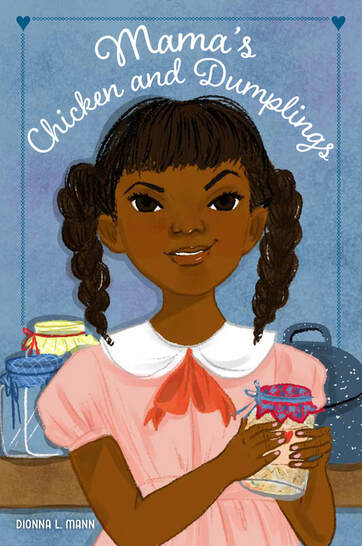
I am super excited to share the cover for my upcoming novel for children, ages 8-12, entitled, MAMA'S CHICKEN & DUMPLINGS, which releases from Margaret Ferguson Books, an imprint of Holiday House Books for Young Readers, August 6, 2024!

I was thrilled when I found out the cover art would be done by the amazing kidlit creator, Vanessa Brantley Newton, who is the author and illustrator of one of my favorite picture books, GRANDMA'S PURSE. And she did not disappoint!
​
Look how Vanessa captures my main character's mischievousness--those eyes, that smirk! Can't you tell that there's a lot going on beneath those gorgeous braids? I also love the design done by Holiday House art director, Kerry Martin. There's such a vintage vibe going on. It perfectly captures my historical setting.

Thanks, Vanessa and Kerry, for giving my story such a gorgeous cover!

0 Comments

THE 24/7s: 7 Kidlit Authors w/ MGs Debuting in 2024

12/24/2022

0 Comments

 
Picture
I'm super excited to share that I'm a member of THE 24/7s--a group of seven kidlit authors with middle-grade novels debuting in 2024!

I wouldn't call us a debut group, per se. All of us have had something traditionally published already. Some have written novellas, young-adult books, picture books, and work-for-hire projects. We've published poems, nonfiction articles, and fictional stories in children's magazines. But we are all debut authors in this sense: none of us have published middle-grade novels that are projects of the heart before.

My debut middle-grade novel, MAMA'S CHICKEN & DUMPLINGS, will be forthcoming from Margaret Ferguson Books, an imprint of Holiday House, in 2024. It's set in a thriving Black Southern community during the Jim Crow era. My main character, Allie, wants more than anything to have an unbroken life, and so she devises a Man-for-Mama Plan, a scheme to find her Mama a good man to marry. And so, with her Daddy Map in one hand and a jar of chicken and dumplings in the other, she sets on a quest within her neighborhood to locate the perfect fix-it-man–one who kind-smiles, who knows how to sing, and who loves her mama’s chicken and dumplings.

Throughout 2023, 2024, and beyond, THE 24/7s will be posting interviews, doing cover reveals, hosting book launches and giveaways, and celebrating when our books receive any kidlit kudos. I'm super excited I won't have to be launching my book alone, and hope you'll hop on over to our website to get to know about all seven of us and to learn about our books. I already have an interview posted. Check it out HERE!


0 Comments

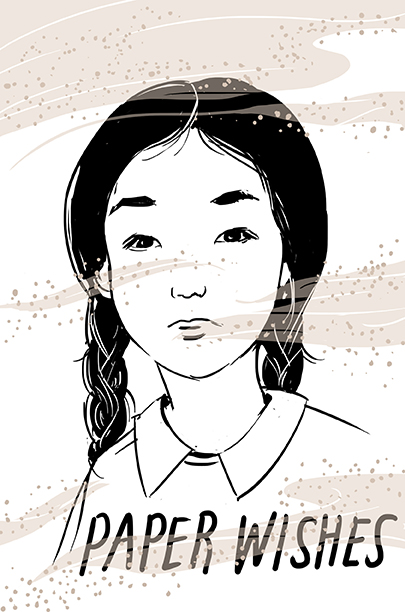
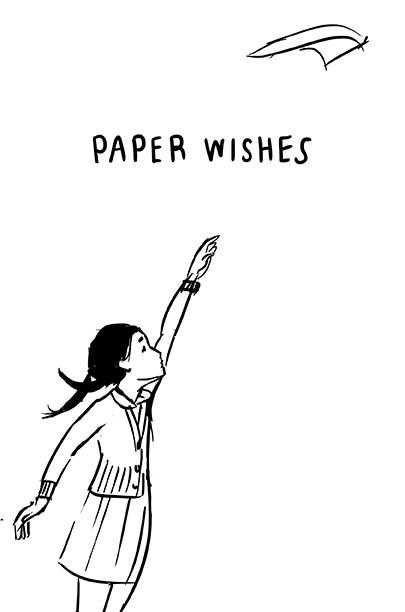
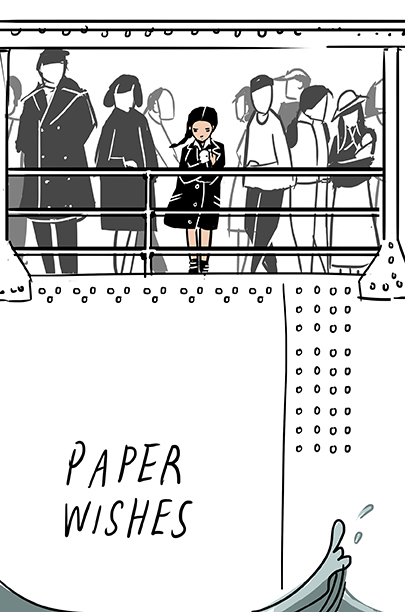
Blog Party! Day 5 Celebrating PAPER WISHES

1/8/2016

3 Comments

 
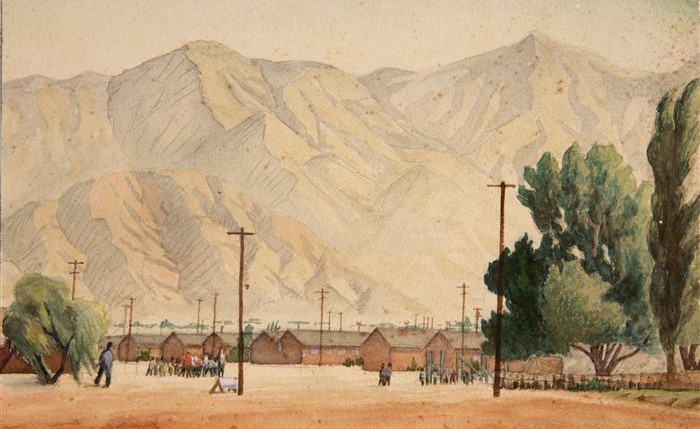
Picture
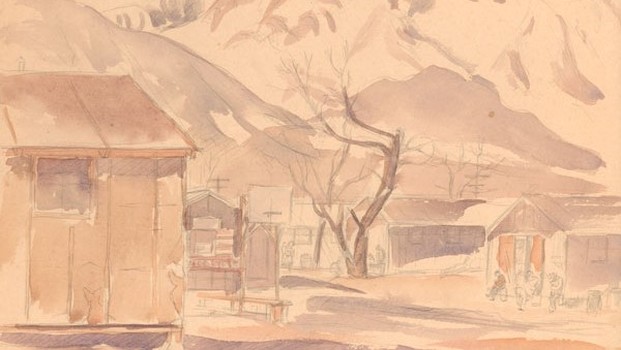
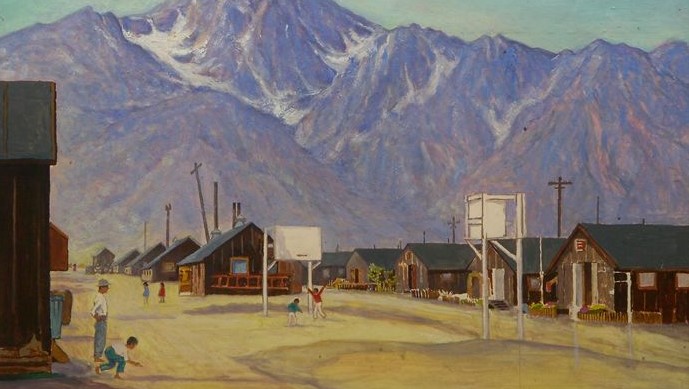
Manzanar Barracks and Mt. Williamson, by Charles Isamu Morimoto, courtesy National Park Service, Museum Management Program, Manzanar National Historic Site, cat# MANZ 7597

Featuring:
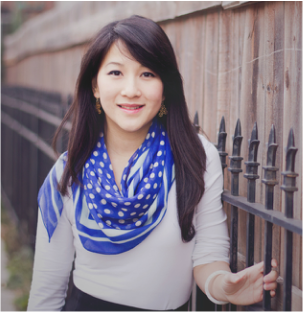
Julia Kuo: Illustrator E
xtraordinaire


PicturePhoto credit: Erin Drewitz
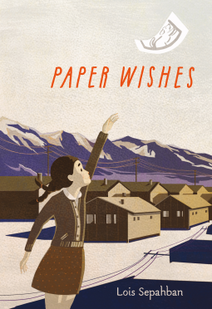
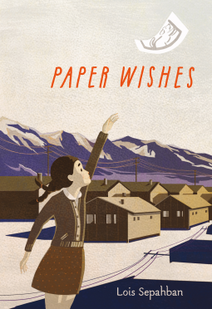
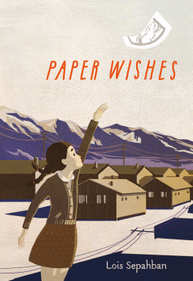
What medium did you use in creating the book cover for PAPER WISHES?

I worked digitally in Adobe Photoshop from start to finish, using a Wacom tablet and stylus. 

How did you decide what key elements would go into the making of the cover for PAPER WISHES?

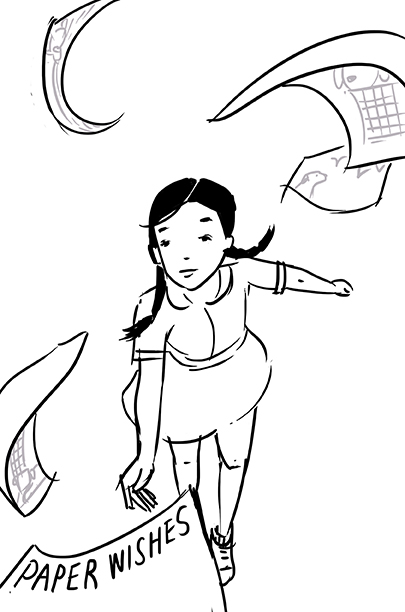
I read the manuscript a couple times to make sure I had the right feel for the book! I took notes on details like how old the main characters were, their appearances, and if anything about their physical selves changed at certain points in the story. I also made sure to bookmark moments that were significant to the plot or scenes that could be visually appealing. Showing Manami on the cover seemed like a must, but I started off with a couple sketches that placed her in different settings.

Did you study photographs of children interned at Manzanar Camp and/or the artwork made by Japanese-Americans internees before finalizing your illustration? If so, how did allow them to influence your illustration decisions?

Yes! I always try to do research to make sure that I’m portraying my subjects accurately. There was actually an article about Ansel Adam’s striking Manzanar photos that popped up at the time I was working on this project. Thanks to the internet, I was able to find plenty of reference for the way that Japanese-American women and children dressed and did their hair during this time. I loved looking at those photos; as a 2nd generation Asian-American I felt personally drawn to these families and their struggles.


Picture
Picture
Picture
Picture

How did Manami's voice combined with her selective mutism influence your stylistic choices when creating illustrations for the cover?

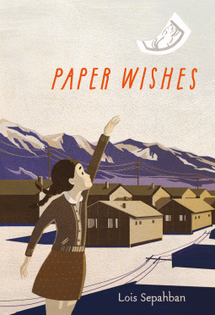
I remember wanting to show the starkness of Manzanar, because understanding the camp was so important to understanding Manami’s distress. Manami chooses to live as a silent girl while she is in Manzanar, so I thought the strong shadows and earthy hues of this bleak and unforgiving desert landscape would easily lend themselves to Manami’s story. 

In what way did you try to instill the theme of PAPER WISHES--of hope triumphing over despair--into your illustrations?

Manami is letting go of one of her many Yujiin drawings, hoping that her messages will bring Yujiin back to her. I felt that the strength of resolve Manami had at the end to move forward with life was not too different from the intense hope and yearning that she had for Yujiin’s return, or for the return of some type of normalcy in her life. She’s a strong girl, and I wanted to show her taking action despite the awful circumstances.

Picture
Julia Kuo is a freelance illustrator, educator, and expert snacker. She can often be found working out of coffeeshops around Chicago or teaching at Washington University in St. Louis. Julia has illustrated children’s books for Simon & Schuster, Little Brown & Co., Macmillan, Simply Read Books, and specialty books for Quarry Books and Random House. Other clients include the New York Times, Columbia Records, Universal Music Group, State Farm, and American Greetings. Julia can be found online at juliakuo.com and Tweeting @juliaskuo.

​P
APER WISHES is
historical-fiction for middle-grade readers ages 8-12. It is written by Lois Sepahban and published by Margaret Ferguson Books an imprint of Farrar, Straus & Giroux (BYR), January, 2016. Sketches used with permission of Julia Kuo and Macmillan Publishing Children's Group. Read a starred Kirkus Review HERE.

3 Comments

Blog Party! Day 4 Celebrating PAPER WISHES

1/7/2016

3 Comments

 
Picture
Manzanar Barracks by G. Okazaki, courtesy National Park Service, Museum Management Services, Manzanar National Historic Site, cat# MANZ 2224

Featuring:
Roberta Pressel: Kidlit Book-Designer Extraordinaire


​Describe your process in working with Julia Kuo, the illustrator, in creating the cover for PAPER WISHES.

After reading the manuscript, the editor and I discussed what would work best for the cover image. We wanted to show Manami’s wistfulness and sadness, but also her hopefulness that the pictures she’s sending will bring her dog back. Julia did not have to do too many sketches before she created the perfect image.

When you first saw Julia’s final illustrations for the cover of PAPER WISHES, what was your emotional response?


I thought that Julia had completely captured the essence of the book.

Though PAPER WISHES details a sad and dark time in U.S. history, in your opinion, how does the cover embody hope?

The image of Manami tossing the picture of her dog into the air indicates that she is hopeful her dog will return and that everything will be okay again. Her expression also shows that no matter what her surroundings are, she is optimistic that things will get better. Her pose and actions are in contrast to the bleak background of the art. 

What story do you hope your cover tells?

I'm hoping that the cover exemplifies the heart of the story--a young girl who feels isolated in a strange place, wishing for her dog and her past life.

If you could give a “Paper Wish” to the young people reading this novel, what would it be?

​If I could give a "Paper Wish" to the young people reading this novel, it would be that they think about Manami's story and how it relates to the world today--how important it is to not let fear cloud judgment. I also hope that young people will be inspired by Manami's struggle to overcome her situation and not give up hope.

Picture
Roberta Pressel is a senior book designer at Macmillan Children's Publishing Group. She works on titles both for Farrar Straus & Giroux and Roaring Brook Press books. Roberta has also been an art director and book designer for Hyperion Books for Young Readers, Disney Press, Random House, Knopf, Scholastic, and Simon & Schuster. Though she specializes in children's book design, Roberta has designed calendars, promotional pieces, and audio and video packaging. Her design work has been displayed in award shows at the Society of Illustrators and The New York Book Show.

​PAPER WISHES
 is historical-fiction for middle-grade readers ages 8-12. It is written by Lois Sepahban and published by Margaret Ferguson Books, January 2016. Read a starred Kirkus Review HERE.

3 Comments

Blog Party! Day 3 Celebrating PAPER WISHES

1/6/2016

6 Comments

 
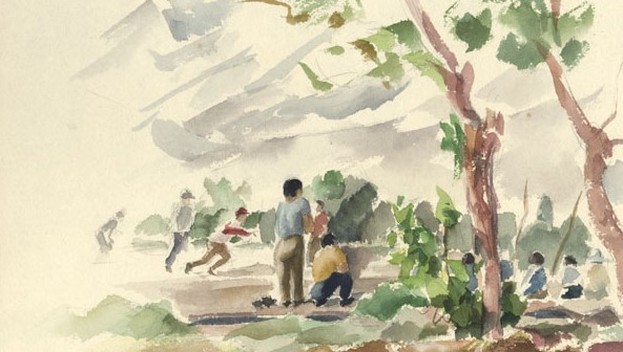
Picture
Playing Baseball at Manzanar by Charles Isamu Morimoto, courtesy National Park Service, Museum Management Program, Manzanar National Historic Site, cat# MANZ 7598

Featuring:
Margaret Ferguson, KidLit Editor & Publisher Extraordinaire


What was it about the narrative of PAPER WISHES that made you fall in love with the character, Manami? 

PAPER WISHES is a story about Manami, a ten-year old Japanese-American girl who is in a terrible situation over which she has no control. She loses her home on Bainbridge Island, her dog, and her life as she knew it when she and her family are sent to Manzanar internment camp after the bombing of Pearl Harbor. Through the love of her family, Manami establishes a rhythm to her days there--spending time with her grandfather, tending her mother's garden, going to school and always longing for her dog, Yujiin, to find his way to her. And when Yujiin doesn't come, she "sends" him paper wishes that she hopes will make him come. The narrative also works in bits about how her family tries to maintain traditions from their old life--having a tea ceremony, a paper lantern ceremony, for examples, which shows us in a subtle way how much they have lost. Throughout the story, Manami's observations and worries seem so real to me, as does her eventual triumph which isn't about being released from the camp, but finding her own voice.

When you first read PAPER WISHES, what was it about Lois Sepahban’s writing style, her voice that truly excited you? 

I love the spare and evocative prose that Lois uses to write her story. In a way, it was like editing poetry where every word is important and can't be misplaced. It was also a fun challenge to maintain that feeling and describe the historical details.             

Why did you decide you wanted to be the editor and publisher for PAPER WISHES?

I had always wanted to acquire a novel about what happened to Japanese Americans during World War II in this country, but had never read one that I liked. When I first read PAPER WISHES, I was struck by how literary it was and how much I believed Manami's voice--it just drew me in. Then I spoke to Lois on the phone and discovered we both grew up in California and shared a fascination with Manzanar--and why it was glossed over in our education. We also discussed the things that weren't clear to me and she was on board to make changes.

As you worked through revisions together, what did you appreciate about Lois's work ethic?

I think I probably drove Lois crazy with all of my comments and questions—at least she knew I cared--but she was always willing to listen. We went through the manuscript four or five times (that isn't unusual for me) and Lois was always eager to get back to work.

What do you hope children reading this book will carry away with them?

I hope that children who read PAPER WISHES will be encouraged by Manami's resiliency in a terrible situation. I also hope it can provide a stepping stone for bigger discussions in classrooms about this horrible injustice against Japanese Americans in our history--and what it means to judge someone so unfairly.


Picture
Margaret Ferguson is a seasoned children's book editor with over thirty years of experience. Under her direction, she has launched  and nurtured Newbery Medal recipients, Caldecott winners, and National Book Award honorees. Some of the authors and illustrators Margaret has worked with include: Brock Cole, Alexandra Day, Uri Shulevitz, David Small, Hope Larson, Claudia Mills, Sarah Stewart, Peter Sis and Judith Viorst. She is the publisher and editor of Margaret Ferguson Books, an imprint of Farrar, Straus & Giroux Books for Young Readers.
​
​
Paper Wishes is historical-fiction for middle-grade readers ages 8-12. It is written by
Lois Sepahban and published by Margaret Ferguson Books, January 2016. Read a starred Kirkus Review HERE.

6 Comments

Blog Party! Day 2 Celebrating PAPER WISHES

1/5/2016

8 Comments

 
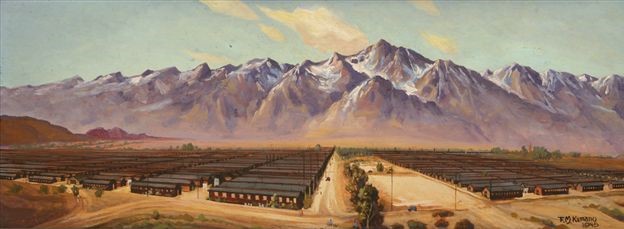
Picture
Mt. Williamson and the Manzanar Barracks, by F.M. Kumano, courtest National Park Service, Museum Management Program, Manzanar National Historic Site, cat# MANZ 7578

Featuring:
Kathleen Rushall, Kidlit Agent Extraordinaire


Picture
How did Lois Sepahban's manuscript, PAPER WISHES, find its way to you?

Lois submitted to me via my email so the manuscript came through in my regular queries folder. It was not a referral and we had never met before. I think it’s good for everyone to remember that you really don’t have to know someone or have an ‘in’ to become published. There is magic in the inbox. It’s one of my favorite parts of this job; never knowing what will arrive in my email each day.  

When you began reading PAPER WISHES, what was it about the story and the writing that kept you turning pages?

PAPER WISHES immediately grabbed me. I remember reading the first page and setting it down to return to Lois’ query letter. I wanted to double check that it was for a middle grade novel. The first few lines were so sparse and lovely; it almost felt like it could be a picture book (where every word matters). Additionally, the earliest version of the manuscript didn’t use punctuation in the standard way. It was so unusual but obviously intentional and intriguing. Manami, the main character, sounded like an old soul. From the first few lines I thought Manami’s voice was accessible for her age but held a wisdom and timelessness that resonated with me right away. For nostalgia’s sake, I just searched my Outlook and found my original reply to Lois’ pitch letter: “I just read the sample pages and am anxious about Manami and Yuijin already.” 

I was completely hooked by those first pages and finished it in one sitting after Lois sent me the full manuscript. I remember walking my dogs that evening with my now husband and talking about the book the entire time. (Kevin learned a lot about Japanese internment camps and what I love in a middle grade voice, hah.) I had a strong reaction; that gut feeling that agents have when we KNOW we have to offer representation to an author and can’t wait to make the call. 

Now, for as much as I knew I loved this book, I also knew it would not be an ‘easy’ or simple sell. It was an unusual format with unique, literary structure, and much shorter than a standard middle grade (it has since been further lengthened), a completely unique reading experience. As an agent, it’s my job to think how to place a book in the current market. Whenever I start to fall in love with a manuscript I begin thinking of comp titles and start strategizing how I would share this with editors. Well, I couldn’t think of comp titles that would fully capture this one. I also knew that it would take just the right editor to do this manuscript justice—someone who loved it as much as Lois and I did. Someone with the right vision. I feel this book really met its mate with Margaret. Together, Lois and Margaret truly made this shine. 

In your opinion, how did Lois infuse history into her narrative without bogging Manami's story down?

The historical details in PAPER WISHES are shown through the characters’ eyes. The characters come first, and I think that’s really the key to any historical fiction. Any details we learn about Manami’s time period are shown as they affect her. Nothing is told to the reader; it’s shown. It’s emotional and intriguing. We discover where Manami’s family is headed at the same time she does. We learn the mistakes she makes with her dog, Yuijin, after it is too late, as she does. We don’t know what she should do or how she should act in her new life at the camp. The reader learns these things alongside Manami.

How did spending time with 10-year-old Manami and experiencing her grief affect you personally?
 
I am not a crier but I cried when I first read PAPER WISHES. This book is very personal to me. Manami’s grief hits home because it’s so grounded. It’s based on something so seemingly simple—her love for her family’s dog and her good intentions toward him. I could easily relate to this as a huge animal lover, but also because it was clear that Manami is grappling to protect at least one small element of her life as it’s crumbling around her. Manami’s dog represents something larger. Through these varying levels of loss, Lois also paves the way for Manami to heal and for the reader to experience this with her. It’s powerful.

What theme found within PAPER WISHES do you hope will resonate with children?

Manami feels powerless in the beginning of this book. In fact, she is so struck by this feeling that she physically loses her voice. I think feeling powerless and not in control of your surroundings is something every child has felt at some point—to varying degrees. It’s so important to know that there is a light at the end of this feeling, how to come out on the other side of that experience. In addition, PAPER WISHES has themes of tolerance and compassion that resonate very strongly in today’s climate. I hope readers will connect to that as well.


Picture
Kathleen Rushall joined Andrea Brown Literary Agency in 2016. She represents writers for all age groups of children’s literature, including picture books (fiction and non-fiction), middle grade, and young adult novels. The most important element that draws Kathleen to any project is a strong voice and unforgettable characters. You can keep up with Kathleen HERE on Twitter. 
PAPER WISHES is historical-fiction for middle-grade readers ages 8-12. It is written by Lois Sepahban and published by Margaret Ferguson Books an imprint of Farrar, Straus & Giroux (BYR), January, 2016. Read a starred Kirkus Review HERE. 

8 Comments

Blog Party! Day 1 Celebrating PAPER WISHES

1/4/2016

19 Comments

 
Picture
Manzanar Block 18, by F.M. Kumano, courtesy National Park Service, Museum Management Program, Manzanar National Historic Site, cat# MANZ 5172

Featuring:
Lois Sepahban, Kidlit Author Extraordinaire


Picture
What inspired you to write a novel for middle-grade readers that deals with the internment of Japanese-Americans in the United States during World War II?  

When I was a child, one of my friends had grandparents who had been forced to move to an internment camp during World War II. We lived in a small mountain town not far from Manzanar, one of two internment camps in California. Because of this personal connection, I have always been interested in learning more about the World War II internment camps.

I was inspired to write this novel by a photograph of a little girl in a book about the children who had been imprisoned at Manzanar. About half of those forced to move to Manzanar were children, and I wanted to write a story about the trauma of that forced relocation.


Explain how your primary research enabled you to create a realistic world for Manami and her family?

My research involved watching hours of interviews with former internees. Densho.org has an archive with hundreds of interviews that include former internees and other people who had worked at the camps, including interviews with teachers, like my fictional Miss Rosalie.

The Manzanar Historic Site is an amazing resource, too. It’s open to the public, and visitors can see what remains of the camp. They also have online exhibitions that include artifacts and documents. 

The Bainbridge Island Japanese American Community has an online museum that includes photographs, video and print interviews, and historical notes. It was a tremendous help during my research.

Anytime you write a historical novel, you are stepping outside of your known world. I’ve found that what works best for me is to spend weeks soaking up the research--taking notes, of course, but otherwise not writing. Once I am able to picture the setting and the characters moving around within that setting in my mind, then I feel ready to start writing. I completely stop researching while I’m drafting--but I do revisit my research after I have a solid draft.

One thing that I did not have to research was the climate, having grown up nearby. It’s dry and windy--so dry that hands and lips are chapped from fall to spring. I have vivid memories of my little brother’s lips with a rosy ring around them for months at a time.


Why would you consider your agent, Kathleen Rushall, a true cheerleader of your story? 

Kathleen’s first words to me were, “I love this story.” She was so excited about Paper Wishes, that I knew she loved it at least as much as I did. During the last two years, her support has buoyed me in those moments when I’ve doubted myself and my work. 

She does the work of a doula: big heart, warm hands, loving words.

Kathleen is more than a cheerleader for Paper Wishes--she’s a cheerleader for me.


Give us an example of a revision request you received from your editor, Margaret Ferguson, and how it moved your narrative to a stronger place.  

Working with Margaret is like taking a master class in writing. She took on my raw manuscript which, at the time, was emotion, emotion, emotion, and very little plot. With precisely placed questions, she pulled scenes from me that have become so necessary to the story.

I think the best example of this is when Manami and her mother are in the garden in October at the end of the growing season. Manami’s mother describes the deep roots that the desert garden had to grow in order to survive and compares them to the shallow roots that grow when there is plenty of rain.

This scene is important for many reasons. It brings the garden’s growing season to a close. It reveals the love between Manami and her mother. And it provides Manami with a moment to reflect on how plants in the desert must be strong to survive, and perhaps to think about how the desert has made her stronger, too.

During the second round of revisions, Margaret wrote a note on the manuscript: need a scene here, perhaps in the garden. Few words, but the right words at the right time to inspire this scene. Her gentle influence is present from the beginning to the end.

Manami has a very close relationship with her family, especially her grandfather. How were you able to draw from your own family experience to develop such a touching narrative?

As a child, I had a deep connection with my paternal grandmother. My father is the youngest of six children, so she was quite old when I was born. But we had wonderful times together. She had a beautiful laugh and gave such good advice. I wanted Manami to have a similar anchoring connection to a grandparent, and it was important to me that strong, loving bonds between her family members were a part of the story.

Manami grieves over the loss of her beloved dog, Yujiin, and sends out "paper wishes" on the wind to try to bring him back again. Have you ever experienced a similar grief? How do you hope children who are grieving will find comfort in Manami's story?

I was deeply affected by my parents’ divorce when I was a child. It was probably the defining moment of my childhood--I tend to think of my childhood in terms of before the divorce and after the divorce. When we moved from our home, my parents decided it would be best to find a new home for our dog, Strider. Years later, I heard that Strider had been spotted near our old home--if that report is true, then he had traveled far to find his way back to us.

Writing about Manami’s grieving forced me to revisit my own grief. I found comfort in her loving family and in Grandfather’s words about love growing her heart, and I hope that readers will, too.

I think that the experience of voicelessness is common for children in difficult situations. Even if they are able to speak, they may not be able to articulate what they are thinking and feeling. I hope that young readers might be moved by Manami’s story to speak their own brave words.


Picture
Lois Sepahban grew up in central California. She spent her childhood climbing trees, reading books, and creating maps and leading her brother and sister on hunts for buried treasures. On all of her adventures she was accompanied by her dog, Strider, an Australian shepherd, who walked her to the bus stop every morning and then met her there to walk home at the end of the day.
She studied literature in college and became a teacher. Today, she is married and has two children. She lives on a small farm where she has a barn full of animals who need homes. She has dogs, cats, and the sweetest chickens in the world. She can be found online at loissepahban.com and Tweeting @loissepahban.

PAPER WISHES is historical-fiction for middle-grade readers ages 8-12. It is a debut novel penned by Lois Sepahban and published by Margaret Ferguson Books an imprint of Farrar, Straus & Giroux (BYR), January 2016.  Read a starred Kirkus Review Here. 

19 Comments

    About Me

    I am a children's book author who loves learning about lesser known individuals shining in the margins of African American history. My debut novel for young readers, Mama's Chicken & Dumplings (Margaret Ferguson Books, 2024), received a starred review from Shelf Awareness and is a Junior Library Guild Gold Selection. I am 
    represented by Kelly Dyksterhouse of The Tobias Literary Agency.


    Copying, reposting, or otherwise republishing anything on this blog without permission is strictly prohibited.

    Picture

    Picture

    Picture

    Picture

    Picture

    Picture

    Picture

    Picture

    Picture

    Picture

    Picture

    Picture

    Picture

    Archives

    January 2026
    October 2025
    September 2025
    July 2025
    April 2025
    March 2025
    January 2025
    December 2024
    November 2024
    October 2024
    August 2024
    July 2024
    June 2024
    May 2024
    April 2024
    March 2024
    January 2024
    December 2023
    September 2023
    August 2023
    July 2023
    June 2023
    May 2023
    February 2023
    January 2023
    December 2022
    November 2022
    September 2022
    August 2022
    June 2022
    May 2022
    January 2022
    October 2021
    September 2021
    June 2021
    February 2021
    December 2020
    September 2020
    August 2020
    July 2020
    May 2020
    April 2020
    March 2020
    February 2020
    January 2020
    December 2019
    September 2019
    August 2019
    July 2019
    June 2019
    May 2019
    February 2019
    January 2019
    October 2018
    August 2018
    July 2018
    April 2018
    February 2018
    December 2017
    August 2017
    July 2017
    June 2017
    May 2017
    February 2017
    October 2016
    September 2016
    August 2016
    July 2016
    May 2016
    April 2016
    March 2016
    January 2016
    November 2015
    October 2015
    September 2015
    August 2015
    July 2015
    February 2015
    May 2014
    March 2014
    September 2013
    July 2013
    May 2013

    Categories

    All
    1935 Labor Day Hurricane
    1935 Vinegar Hill Charlottesville VA
    2024
    2025
    Abigail Halpin
    A Big Mooncake For Little Star
    Abrams Books For Young Readers
    Adriann Ranta Zurhellen
    African American Business Owners 1930s
    African Art By Children
    Aladdin Pix
    Albert Whitman & Company
    Alexandra S.D. Hinrichs
    Alfred A. Knopf
    Alice Ratterree
    Alvina Ling
    Alyssa Bermudez
    Amanda Vacharat
    Amy Harding
    Amy Lee-Tai
    Andrea Beatriz Arango
    Andrea Brown Literary
    Angela Dominguez
    Angie Arnett
    Angie Miles
    Angie Smibert
    Anna Lapera
    Anna Staniszewski
    Anne Marie Pace
    Anne Moore Armstrong
    Annual Virginia Book Events
    A POEM GROWS INSIDE YOU
    Arrows
    Arthur Levine Books
    Art-Themed Challenges
    Ashley Spires
    Ashley Walker
    Autism Picture Book
    Awards
    Bagram Ibatoulline
    Balzer + Bray
    Barb McNally
    Barb Rosenstock
    Beach Lane Books
    Ben Franklin's Big Splash
    Best Book Of The Year
    BIRD NERD
    Blink YA Books
    Blog Hop
    Blog Parties
    Board Books
    BO AT THE BUZZ
    Book Launch
    Book Launch Parties
    Booklists
    Book Trailers
    Boyds Mills And Kane
    Boyds Mills Press
    BRAVE BALLERINA
    Brenda Woods
    Brian Rock
    Bright Literary Agency
    Brown Books For Young Readers
    Busy Eyed Day
    Busy-Eyed Day
    Calkin's Creek
    Callie C. Miller
    Candlewick Press
    Capstone
    Carina Povarchik
    Caroline McPherson
    Cetologist
    Changes In Publishing
    Charlie & Frog
    Charlottesville Illustrator
    Charlottesville Indie Bookstore
    Charlotteville
    Chronicle Books
    Clarion Books
    C. M. Surrisi
    Colleen Muske
    Colleen Paeff
    Comic Book Creator
    Commerce Street Books
    Confetti Kids
    Content Editor
    Coping Skills School-aged Children
    Copyeditors
    Cover Reveal
    Coyote Moon
    Craft Of Storytelling
    Craft Of Writing
    Crenshaw
    Cricket Magazine Contributor
    Critiquing
    Crossover
    Cyndi Marko
    Cynthia Cliff
    Daniel Bernstrom
    Daniel Nayeri
    Dave Mottram
    Dawn P. Noren
    DC KidLit Events
    Deaf Main Characters
    Deborah Diner
    Deborah Lakritz
    Deborah Prum
    Diana Ma
    Dionna Mann
    Dish Up A Reading Delight
    Disney-Hyperion
    Dolores Andral
    Donna & Libby Farrell
    Don Tate
    Doris Kutschbach
    Ebony Glenn
    Eerdmans Books For Young Readers
    Elliott Smith
    Engaging The Audience
    Erica Perl
    Erin Murphy
    Erin Murphy Literary Agency
    Ethan Suspended
    Eucalyptus Tree
    EVELYN DEL REY IS MOVING AWAY
    Farrar Straus And Giroux
    Fearless Public Speaking
    Feiwel & Friends
    Felicia Macheske
    Fine Art Raven Photographer
    Flashlight Night
    Fort Building Time
    Foundry Literary + Media
    Four Beautiful Picture Book Biographies
    Fran Cannon Slayton
    Frann Preston Gannon
    Frann Preston-Gannon
    Fred Koehler
    From My Notes
    Garvey's Choice
    Georgia Watson And The 99 Percent Campaign
    Getty Publications
    GIFTS OF THE MAGPIE
    Good Illustration Ltd.
    Grace Lin
    Grammar Tip
    Great Nocturnal Book For Kids
    Growing Up Pedro
    Hannah Barnaby
    HarperCollins
    HB Steadham
    Heather Brockman Lee
    Heather Mullaly
    Highlighter SCBWI Mid-Atlantic Newsletter
    Historical Fiction
    Holiday House Books
    Holly Webb
    Holt Books For Young Readers
    Houghton Mifflin Harcourt
    How To Draw A Lion
    I Love My Library
    Interviews
    Iris Deppe
    IVELIZ EXPLAINS IT ALL
    Jack Keely
    Jacqueline Jules
    Jacques Kaufmann
    Jacqui Lipton
    Jefferson School
    Jen Malia
    Jennifer Ann Richter
    Jennifer Elvgren
    Jennifer Laughran
    Jennifer Unter
    Jen Shulman
    Jess Brailler
    Jessica Sinsheimer
    Jewell Parker Rhodes
    Joanie Stone
    Joanne Lew-Vriethoff
    John Parra
    John-platt
    Joy-jones
    Julia-kuo
    Julie-matysik
    Jump-back-paul
    Jumpy-jack-googily
    June-hunter
    Kara-reynolds
    Kar-Ben Publishing
    Karen-kane
    Karen-nagel
    Kate-testerman
    Katherine-applegate
    Kathleen-kellett
    Kathleen-rushall
    Kathryn-erskine
    Katrin-dreiling
    Kell-andrews
    Kelly Dyksterhouse's Crew
    Kellye-crocker
    Kidlit411
    Kidlit-agent
    Kidlit-agent
    Kidlit-art-director
    Kidlit-art-director
    Kidlit Artist
    Kidlit Author
    Kidlit-author-illustrator
    Kidlit-author-illustrator
    Kidlit-book-designer
    Kidlit-coauthors
    Kidlit-cville-blog-party
    Kidlit-editors
    Kidlit-editors
    Kidlit-events
    Kidlit-events
    Kidlit Love
    Kidlit Reviews
    Kid-reviewer
    Kids-can-press
    Killer-whales
    Kristenpaige-madonia
    Kwame-alexander
    Kweli-the-color-of-childrens-literature-conference
    Ladybug-magazine
    Laura-lyn-disiena
    Law-and-authors-a-legal-handbook-for-writers
    Leah-henderson
    Leaving-room-for-the-illustrator
    Lee-low-books
    Lerner
    Leslie-stall-widener
    Less-is-more
    Levine-querido
    Librarians Favorite
    Lilliput
    Lilys-new-home
    Linda-pratt
    Lindsey McDivitt
    Lion Of The SKy
    Lions-cheetahs-rhinos-oh-my
    Lisa-bronson-mezoff
    Literary-agent-interviews
    Literary-agent-interviews
    Little
    Little-brown-books-for-young-readers
    Little-brown-books-for-young-readers
    Liza-wiemer
    Lois-sepahban
    Lois-sepahban
    London
    Lynne-chapman
    Madeline
    Madelyn-rosenberg
    Making-it-not-too-personal-query-etiquette
    Mama's Chicken And Dumplings
    Mani-semilla-finds-her-quetzal-voice
    Marc-boston
    Marfe-delano
    Margaret-ferguson
    Margaret Ferguson Books
    Maria-gianferrari
    Marvelous-cornelius
    Marvelous-cornelius-blog-party
    Mary-amato
    Mary-jane-penny-candies
    Maryland-kidlit-events
    Mary-rand-hess
    Matt-forest-esenwine
    Maverick-childrens-books
    Megan-wagner-lloyd
    Meg-medina
    Meg-medinas-oneminute-writing-tips
    Melissa-gorzelanczyk
    Melissa-manlove
    Michael F. Stewart
    Michael-j-rosen
    Michelle-meadows
    Middle Grade
    Middlegrade
    Moira-donohue
    Moira-donohue
    Monica-mancillas
    My-work
    Nancy-carpenter
    Nancy-paulsen-books
    Nedda-lewers
    Nfpost
    Nikki-grimes
    Noaa-scientist
    Notable Mentions
    Olga-m-herrera
    Olivia-hinebaugh
    One-day-in-the-eucalyptus
    One-good-deed
    Only-my-dog-knows-i-pick-my-nose
    Orcas-by-dionna-l-mann
    Orchard-books
    Pam-ehrenberg
    Paper-wishes
    Paper-wishes
    Paper-wishes-blog-party
    Paper-wishes-blog-party
    Paula-yoo
    Peachtree-publishers
    Penguin-workshop
    Personal-rejections
    Phil-bildner
    Picture-book-about-change-and-grief
    Picture-book-biography
    Picture-books
    Pj-books
    Planting-parsley
    Poet-remarkable-story-of-george-moses-horton
    Pottypartybydionnalmann
    Pov
    Preorder Campaign
    Prestel-junior
    Proofreading
    Queries
    Query-kombat
    Query-kombat-2018-grand-champion
    Race-car-dreams-blog-party
    Random-housedelacorte
    Rashin-kheiriyeh
    Raven-quill-literary-agency
    Rejections
    Renee-graef
    Return-to-the-secret-garden
    Ritu-hemnani
    Roberta-pressel
    Rosie-mccormick
    Running-press
    Ryan-hayes
    Saffron-ice-cream
    Sairom-moon
    Sam-gayton
    Sam-hundley
    Sampsons-happy-pals
    Sarah-jane-freymann-literary-agency
    Sara-holmes
    Sarah-whang
    Sara Shacter
    Sase
    Scholastic-press
    School-visits
    School-visits
    Scott-dubar
    Scrap-artist
    Sd-schindler
    Sensory-issues
    Seth-fishman
    Setting
    Sharon-chriscoe
    Shirley-ngbenitez
    Short-pump-bump
    Simon-schuster
    Simon-schuster
    Sing-it-like-celia
    Sleeping-bear-press
    Slush-piles
    Solo
    Sonia-sanchez
    Sophia Green
    Sourcebooks
    Sparknotes
    Spencer-hill-contemporary
    Spooky-cheetah-press
    Stan-fellows
    Stephanie-fitzgerald
    Susan-bartoletti
    Susan-batori
    Susan-vanhecke
    Susan-wood
    Suzie-townsend
    Swenke-elementary-book-trailer-crew
    Sylvia-liu
    Tag-your-dreams
    Tami-traylor
    Teresa-bonnadio
    Terrible-typhoid-mary
    Terri-fields
    The 24/7s
    The-amazing-age-of-john-roy-lynch
    The-boney-hand
    The-crossover-review
    The-great-stink
    The Green Piano: How Little Me Found Music
    The-innovative-press
    The-most-magnificent-thing
    Therese-makes-a-tapestry
    The-tale-of-rescue
    The-unbeatable-lily-hong
    The-wild-garden
    The-word-a-storytelling-sanctuary
    THINGS THAT SHIMMER
    This-little-piggy-an-owner-manual
    This-little-piggy-has-a-blog-party
    Thread-of-love
    Tillmon-county-fire
    Tips-for-book-events
    Tom-angleberger
    Tom-birdseye
    Towers-falling
    Trombone-shorty
    Tuck And Tina And The Lost Fortune
    Uwe-stender
    Va
    Vinegar-hill
    Virginia-festival-of-the-book
    Virginia-kidlit-events
    Virginia-kidlit-events
    Virginia-literary-events
    Virginia Readers' Choice Primary Selections 2024-2025
    Walking Tour
    Want-to-play
    Wendy-shang
    Wordsong
    Work-for-hire
    Writing Advice
    Writing-process
    Writing Quotes
    Yaroslava-apollonova
    Zara González Hoang
    Zoe In Wonderland